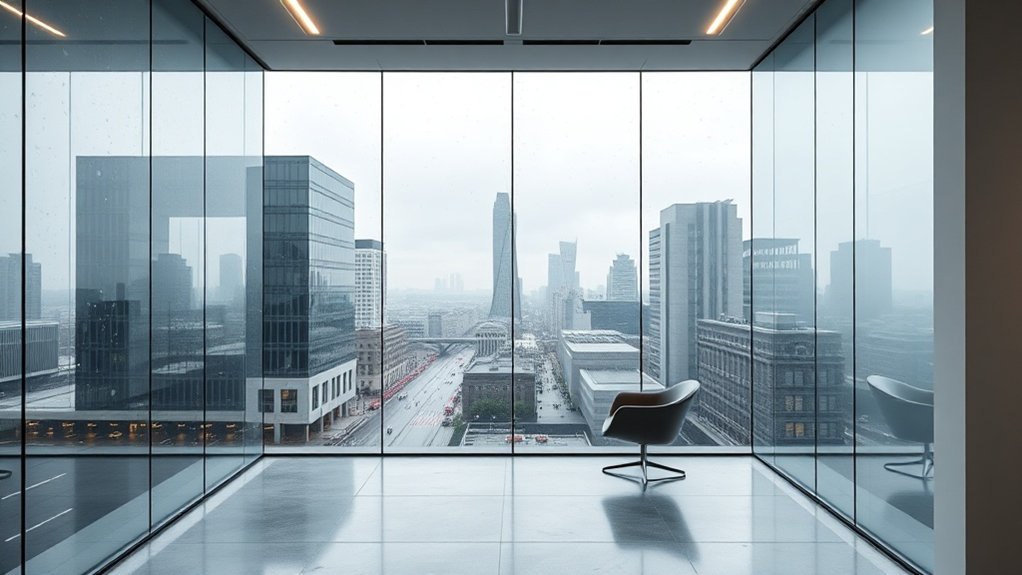
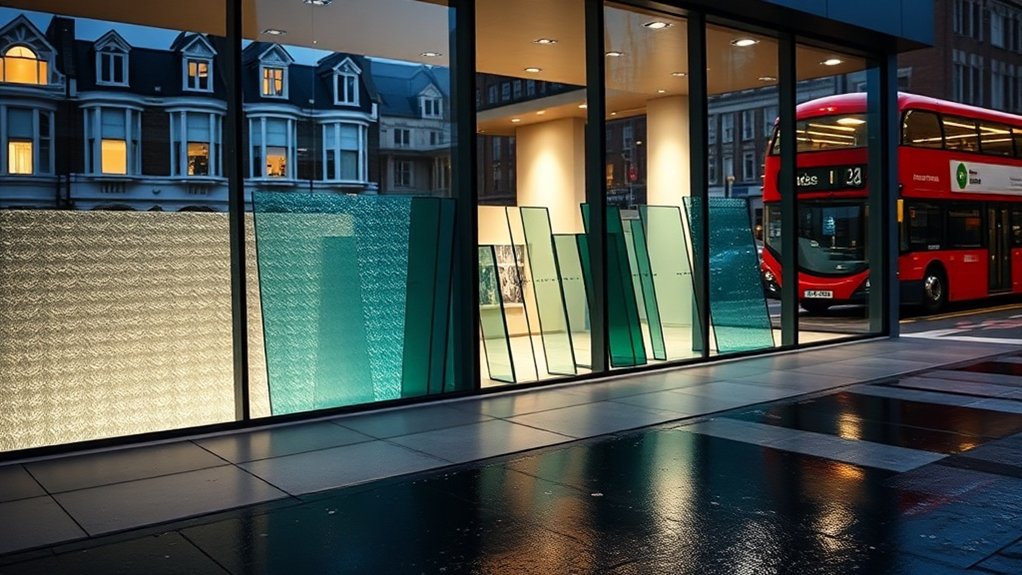
Specialist glass in Bickley means glazing made and tested to do a defined job: stop someone falling through it, slow down a break-in, hold back fire, cut traffic noise, keep heat in or keep the sun out. We supply and fit toughened and laminated safety glass, acoustic laminates, solar-control and low-E units, fire-rated systems and slimline heritage glazing, each selected against the impact class, fire strategy and conservation requirements of the building. The right glass type, thickness, fixing and paperwork are what keep a project compliant, efficient and safe, and the sections below set out how we get there.
Key insights
- Specialist glass in Bickley covers toughened, laminated, acoustic, low-E, solar-control and fire-rated products, each made to a BS or EN standard for a measurable result.
- It is used in shopfronts, façades, rooflights, balustrades, shower screens and heritage refurbishments, with glass type and thickness matched to loads and location.
- Typical requirements are impact resistance to BS EN 12600, security to BS EN 356, acoustic targets and certified fire performance (E, EW, EI) in a tested frame.
- High-performance units combine low-E coatings, warm-edge spacers, argon fills and laminated make-ups to cut heat loss, glare and noise in built-up streets.
- A good Bickley supplier provides test certificates, UKCA or CE marking, documented quality control and experience of complex façades and conservation work.
What Counts as Specialist Glass in Bickley, BR1?
Ordinary float glass is a commodity. Specialist glass in Bickley is any product processed or treated to meet a stated performance target beyond that baseline: extra strength, safety on impact, insulation, security, sound reduction or a particular appearance. The purchase is not a pane; it is a defined load capacity, impact class, fire rating, acoustic figure or U-value.
The test is whether the performance can be measured and verified against a BS or EN classification. That holds for a discreet high-performance unit slipped into a Victorian sash just as much as for a printed glass artwork in a public building. If the glass changes how light, heat, sound, privacy or forced-entry resistance behave in a predictable and testable way, it belongs in the specialist category rather than standard glazing.
Key Types of Specialist Glass for Bickley Projects
A fairly short list of glass types covers most Bickley projects, from safety and security through to thermal and acoustic control. Toughened and laminated safety glass is the starting point, with impact performance to BS EN 12600 specified for doors, side panels, balustrades and overhead glazing.
For façades and rooflights, low-E and solar-control coatings are combined in insulated glass units to lower U-values, limit heat gain and support energy targets. Acoustic laminated glass deals with traffic and late-night noise without losing clarity.
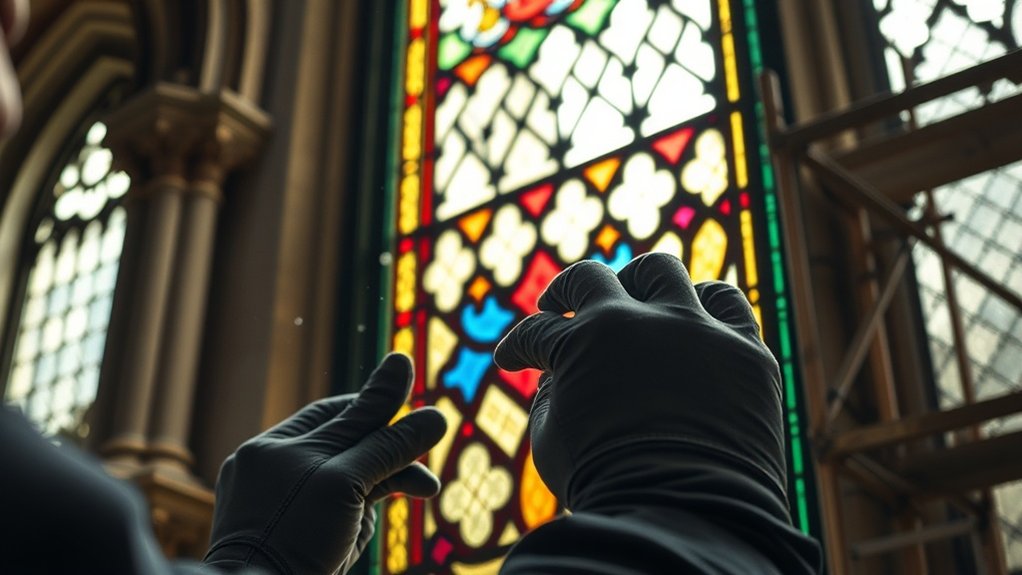
In conservation areas and listed buildings, slimline double glazing, restoration glass with a slight surface ripple, or laminated heritage units reproduce the look of old glazing while meeting modern safety and energy expectations, and can be fitted in a way that is reversible and acceptable to planners.
How to Match Specialist Glass to Your Bickley Project
Every Bickley, BR1 project is different, but glass selection works best as a structured decision balancing safety, performance and planning. Begin by listing each window, rooflight and partition against its wind load, impact risk and role in the fire strategy, then set the glass type, thickness and coatings to suit.
Where a room overheats or loses too much heat, prioritise solar-control and low-E coatings. In conservation areas, check the reflectivity, tint and light transmission of the chosen glass against heritage guidance and any daylight assessment, since a mirrored façade will not get past the planning officer.
Think about the whole life of the glass from the start. Choose products with clear cleaning guidance, durable edge seals and scratch-resistant surfaces to reduce early failures. Where possible, prefer demountable framing and documented material composition so panels can be recovered and recycled when the building changes, which is becoming a planning and carbon reporting issue in its own right.
Toughened and Laminated Safety Glass for City Living
On busy Bickley streets, the most carefully specified glass is worthless if it cannot protect people from impact, break-ins or a fall from height, so it helps to know how the two main safety glass types behave when they fail.
Toughened glass is heat-treated to be around four to five times stronger than float and copes well with thermal stress; when it does break it crumbles into small blunt pieces, which reduces injury. The drawback is that the whole pane drops out. Laminated glass bonds two or more panes to a PVB or ionoplast interlayer, so a broken pane stays in the frame, keeps the opening closed and slows an intruder. For balustrades and overhead glazing we normally laminate toughened glass to get both benefits.
Specialist Glass Balustrades for Bickley Stairs and Terraces
A glass balustrade on a Bickley staircase, terrace or roof garden looks light, but it is the primary barrier stopping someone falling, and it has to take crowd loads, wind and accidental impact without giving way. Each panel is a structural component with a calculation behind it, not a finishing touch.
We specify laminated safety glass with structural interlayers, checked against the line, point and distributed loads in BS 6180, at the heights set by Approved Document K: 1100 mm on external balconies and 900 mm on internal stairs and landings. Channels, brackets and point fixings are chosen to limit deflection, keep glass away from metal contact and resist corrosion. A handrail or capping adds stiffness and keeps the barrier in place if a panel is damaged.
On period properties the balustrade is lined through with existing sightlines, while low-iron glass, polished edges and minimal fixings keep views and daylight open.
Frameless Shower Glass and Enclosures in Bickley, BR1
The same structural discipline applies to frameless shower screens and enclosures in Bickley homes and hotels. Each screen is a barrier in a wet zone that must handle impact, thermal shock from hot water and daily use for years. We use toughened or laminated safety glass, cut precisely so panels do not rack, edges do not chip and hinges are not overloaded.
Hinge and channel positions are set to keep deflection low and leak paths short, and the seals, threshold and floor fall are designed together as a drainage system rather than added at the end.
- Glass thickness is matched to panel span, door weight and how heavily the shower will be used.
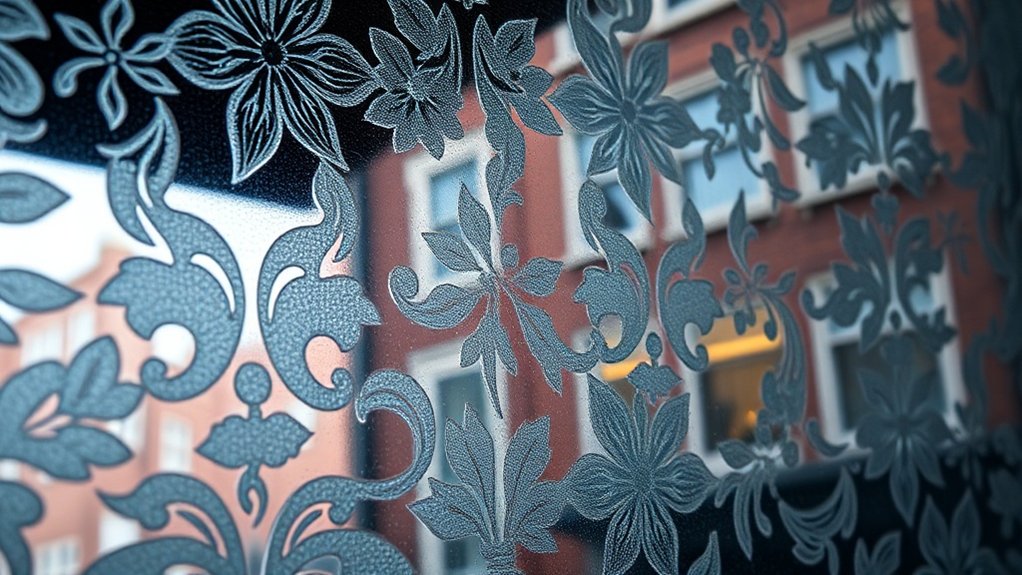
- Acid-etching, fritting and digital printing can be added for privacy or decoration without reducing strength.
- Proportions and door swings borrow from well-planned bathrooms so the enclosure is easy to enter and clean.
Shopfront and Commercial Glazing for Bickley High Streets
A high-street shopfront in Bickley has to look current and still meet strict safety and performance requirements. That means security and safety glazing that resists impact and forced entry and satisfies the British Standards for commercial premises, together with energy-efficient glass that reduces heat loss and solar gain so the shop stays comfortable and the bills stay down.
Modern Shopfront Design Trends
High streets across Bickley serve very different trades, but the shopfronts that work best share the same glazing principles: unbroken sightlines into the shop, proven security performance and compliance with British Standards and local planning policy. The window is the point where the brand, the street and the customer meet.
Most current designs pair clean minimal framing with nods to traditional proportions, reinterpreting pilasters, fascias and stallrisers in modern materials. Laminated or toughened units support the techniques that make that possible:
- Low-iron glass so displayed goods show their true colours
- Structural glazing that removes visible mullions and clutter
- Performance coatings that keep the sun off stock and shoppers
Security and Safety Glazing
A Bickley, BR1 shopfront displays stock by day and acts as the main security and life-safety barrier by night. The glazing has to resist impact, forced entry and fragmentation, which means classification to BS EN 356 for manual attack and BS EN 12600 for impact. Laminated security glass with an interlayer designed for controlled breakage reduces injury, protects stock and keeps the view clear for CCTV.
Security does not have to spoil a heritage frontage. Specialist processors can CNC-cut, heat-treat and laminate panels to suit original frames, curved corners and bespoke branding. Anti-bandit and anti-shatter make-ups can be tuned to the risk level of a particular Bickley street, so the frontage becomes a resilient, compliant security envelope rather than the weakest point of the building.
Energy-Efficient Commercial Glass
Even under the overcast skies Bickley is used to, a large area of single or dated glazing behaves as a thermal weak point in a shop or office, so energy-efficient glass is a core decision rather than an upgrade. The balance is between transparency, thermal performance and comfort for staff and customers within the limits of the building and the regulations.
The usual package is a low-emissivity coating, warm-edge spacers and an argon-filled cavity, which brings the U-value down without a visible tint. Set the targets early:
- U-value, g-value and light transmittance figures that match the energy model for the building.
- Seals and materials with proven durability and the right fire classification.
- Structurally glazed units or integral blinds where they reduce thermal bridging at the frame.
Careful detailing at frames and junctions is what makes the installed glass deliver the figures on the datasheet.
Structural Glass Walls, Roofs and Extensions
Structural glass walls, roofs and extensions in Bickley replace conventional load-bearing elements with glazing that has to carry its own load and perform thermally and safely in local conditions. Glass thickness, interlayer type and fixing geometry are coordinated so every pane behaves predictably under wind, impact and the deflection limits that keep seals intact.
Low-iron glass gives the clearest result, and frit patterns, ceramic coatings and selective finishes can be added to manage privacy or solar gain without affecting structural performance. Stainless or aluminium point fixings and glass fins are detailed to allow for movement, absorb tolerances and keep drainage paths open. Edge cover, laminated make-ups and barrier loads are documented to satisfy UKCA marking, BS 5516 for sloped glazing and the Eurocodes, so the result is permanent transparency with the paperwork to prove it.
Acoustic and Privacy Glass for Busy Bickley Streets
Constant traffic and footfall make Bickley, BR1 a hard acoustic environment, but acoustic and privacy glass can reduce noise coming in and manage sightlines without losing safety or thermal performance. Laminated make-ups interrupt the path of vibration through the pane and give dependable sound insulation against traffic, sirens and building work.
The usual combination is:
- Asymmetric laminated panes with an acoustic PVB interlayer tuned to the frequencies traffic produces.
- Cavity depths and gas fills in double or triple glazing chosen to limit resonance and flanking transmission.
- Privacy built into the glass, whether acid-etched, ceramic-fritted, switchable PDLC or electrochromic, so heavy blinds are unnecessary.
Glass thickness, pane weight and frame tolerances are checked together so the units are safe to handle, safe in use and stay acoustically stable over time.
Fire‑Rated Glass for Safe, Compliant Bickley Refurbs
Any Bickley refurbishment that touches a fire door, a protected corridor or a compartment wall will need fire-rated glass classified to BS EN standards and chosen in line with Approved Document B. That involves understanding integrity and insulation ratings, where compartment lines run, and how the glazing interacts with fire doors, partitions and escape routes. These safety-critical systems can still be slim-framed and clear, with sightlines coordinated so performance and appearance work together.
Understanding Fire-Rated Standards
Fire safety in Bickley refurbishments is tightly controlled, so it pays to be precise about what fire-rated means. It is not thicker glass; it is a tested assembly of glass, frame, seals and fixings that maintains integrity (E), integrity and insulation (EI) or integrity with reduced radiation (EW) for 30, 60, 90 or 120 minutes, classified under BS EN 13501-2 or the older BS 476 tests.
Choosing a rating means choosing evidence. The test certificate has to cover:
- The orientation, fixing method and maximum pane size being installed
- The surrounding construction and the fire load assumed in the test
- Any film, manifestation or decorative treatment applied to the glass
On listed buildings, ask for the full classification report rather than a summary datasheet, so due diligence can be demonstrated later.
Integrating Safety With Design
Knowing how fire-rated systems are classified and evidenced is half the job; the other half is making them work architecturally in a Bickley refurb without weakening the compliance case. The balance is between the EN rating, structural limits and frame sightlines on one side and daylight, openness and brand identity on the other.
The approach that works is to treat fire-rated glass as a primary material rather than an obstacle. Select the tested assembly first, then add appearance: controlled patterns, selective etching and interlayers that do not alter the certified make-up. Frame depth, fixing method and edge cover are kept exactly as tested to preserve the rating.
Early input from the fire engineer and the fabricator helps rationalise panel sizes, reduce visible framing and line up protected zones with the layout.
Decorative, Coloured and Printed Glass for Bespoke Interiors
Decorative, coloured and printed glass is chosen for its looks first, but in a bespoke interior it also controls light, privacy and visual impact while remaining a safe, structurally sound material. Translucency, reflection and colour depth are specified to suit the space, and compliant laminating, toughening and edge finishing keep the glass robust in high-traffic settings such as offices, bars and hotel lobbies.
Each pane is treated as a calibrated surface, where craft and tolerance meet. Colour becomes a practical tool for zoning, wayfinding and brand recognition rather than pure decoration.
- Fine patterns can guide people, screen views and reduce glare
- Ceramic frit or printed interlayers give graphics that resist abrasion and cleaning
- Fixings and hardware are coordinated so load paths and impact ratings are preserved
The result is glass that behaves as a controlled design element rather than a decorative risk.
Energy‑Efficient and Solar Control Specialist Glass in Bickley, BR1
Reducing solar heat gain, glare and heat loss without losing clarity or safety comes down to specifying energy-efficient and solar-control glass suited to Bickley's changeable weather. A low-emissivity coating reflects long-wave heat back into the room while letting most visible light through. A spectrally selective coating rejects infrared from the sun yet keeps a neutral appearance and true colour rendering inside.
Laminating panes with a solar-control interlayer adds UV filtering, impact resistance and some noise reduction in one unit. The g-value, U-value and light-to-solar-gain ratio can be tuned to the orientation of each elevation and how the rooms are used. Adding warm-edge spacers and an argon fill reduces condensation at the edge of the pane and keeps the interior comfortable through the year.
Choosing a Specialist Glass Supplier in Bickley
Picking a specialist glass supplier in Bickley means checking measurable quality standards, certification and compliance with the relevant British and European rules. It also means looking at realistic lead times, delivery arrangements and handling procedures, because glass that turns up late or damaged stalls the whole site. The best suppliers add technical design input, accurate fabrication tolerances and support for bespoke work.
Assessing Quality Standards
Before committing to a supplier in Bickley, question their quality control as closely as you would any safety-critical component. Ask how impact resistance, edge stability and coating durability are tested and which BS and EN standards those tests follow. Ask how the glass should be maintained and how it will perform in ten years, not just on handover.
Ask for evidence rather than reassurance:
- A certification trail: ISO accreditation, CE or UKCA marking and test reports for each glass type and interlayer.
- Documented process control at cutting, toughening, heat-soaking and laminating.
- A track record on complex façades and heritage glazing, including compatible sealants and thermal stress checks.
The aim is accountable expertise, not experimentation on your building.
Lead Times And Delivery
The best specification fails if the supplier cannot meet the programme or deliver to site safely. A good specialist plans production slots, autoclave and curing times and transport around your build sequence and commits to dates in writing.
Ask whether they can hold short lead times while producing large-format, laminated or high-performance units in volume. Request their on-time, in-full delivery record, what contingency stock they hold and what backup transport is available if a vehicle fails.
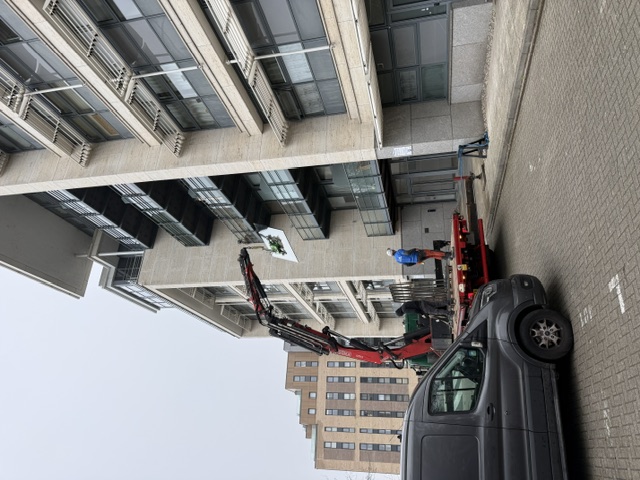
Deliveries should follow method statements that comply with CDM 2015, covering lifting equipment, exclusion zones and the order in which elevations are glazed. When lead times, delivery method and design flexibility are coordinated, you avoid crane downtime, reprogramming and expensive temporary works.
Customisation And Design Support
Reliable delivery only matters if the glass achieves the design intent, so look for a supplier that treats design support and customisation as engineering rather than a sales extra. You are specifying performance, tolerances, interfaces and long-term safety, not simply ordering panels.
A good Bickley, BR1 specialist works with the design team early to simplify awkward geometry, integrate fixings and check the structural calculations, and can turn an ambitious drawing into a buildable detail while respecting any conservation constraints.
Expect them to provide:
- CAD or BIM-ready models and tested fixing details
- Samples and mock-ups to judge optical quality and slip or impact performance
- Guidance on BS and EN compliance, loading, fire regulations and access requirements
Lead Times, Site Surveys and Installation for Bickley Glass Projects
On a specialist glass project in Bickley, accurate lead times, a rigorous site survey and controlled installation decide whether the finished system performs as specified and meets safety standards. The programme has to allow for structural calculations, bespoke processing, toughening and lamination cycles and the realities of urban deliveries, so glass arrives when the site is ready for it.
At the survey, technicians laser-measure the openings, check the substrate, confirm load paths and plot fixing positions, which is essential on complex or expressive glass elements. They also verify tolerances for movement, drainage and fire-safety interfaces.
The installation team then handles the glass with certified lifting gear and anti-collapse controls under a documented method statement, making sure seals, anchors and edge clearances satisfy British Standards and the manufacturer's requirements.
Specialist Glass Costs in Bickley and Common Mistakes to Avoid
A good survey and careful installation only pay off if the budget is scoped with the same care. Specialist glass costs in Bickley climb quickly when structural requirements, access logistics or compliance testing are underestimated, because the price covers an engineered system rather than a stack of panels.
The usual causes of overspend are skipped loading studies, late design changes and vague performance specifications. To keep budget and risk under control:
- Fix optical quality, acoustic and thermal targets before going out to tender.
- Price fixing details, access equipment and temporary works into the cost plan from the start.
- Include lifecycle costs for cleaning, seal replacement and the occasional panel swap.
Handled this way, performance, safety and the commercial picture stay in step.
If this is not quite what you need, we also cover acoustic glass, anti-bandit glass and bullet resistant glass.
Frequently Asked Questions
Can Specialist Glass in Bickley, BR1 Be Repaired, or Does It Always Need Replacing?
Not always. Light surface scratches and small chips in thick glass can often be polished out, and a damaged outer pane in a laminated unit can sometimes be replaced on its own. Cracks, edge damage and a delaminating or clouded interlayer are a different matter: they compromise the safety rating, so the unit should be replaced. When replacing, we reassess thickness for structural and impact performance and review tint and coating options at the same time. A certified installer keeps the glazing compliant with the relevant standards.
How Do I Maintain and Clean Specialist Glass Without Damaging Coatings or Tints?
Treat coated and tinted glass gently and consistently. Use a pH-neutral, ammonia-free cleaner and a clean microfibre cloth; avoid abrasive pads, scrapers, paper towels and squeegees with nicked blades, all of which scratch coatings. Wipe in straight vertical strokes rather than circles to avoid swirl marks, and rinse with de-ionised water where available to prevent spotting. Never use hot steam or solvent cleaners on tints, low-E layers or laminated edges, as heat and solvents can cause haze or delamination.
Are There Planning Permission Issues for Using Structural or Coloured Glass in Bickley Homes?
Possibly. Planning becomes relevant when structural or coloured glass changes the external appearance of the house, affects neighbours' privacy or creates new overlooking, and conservation areas are stricter still. A rear extension or an internal glass floor is often covered by permitted development, but full-height glazed façades, large rooflights and glass balconies usually benefit from pre-application advice and a detailed glazing specification. Building Regulations apply regardless, covering structural loads, thermal performance, safety glazing in critical locations and balustrade heights.
Can Existing Traditional Sash Windows Be Upgraded With Specialist Glass Solutions?
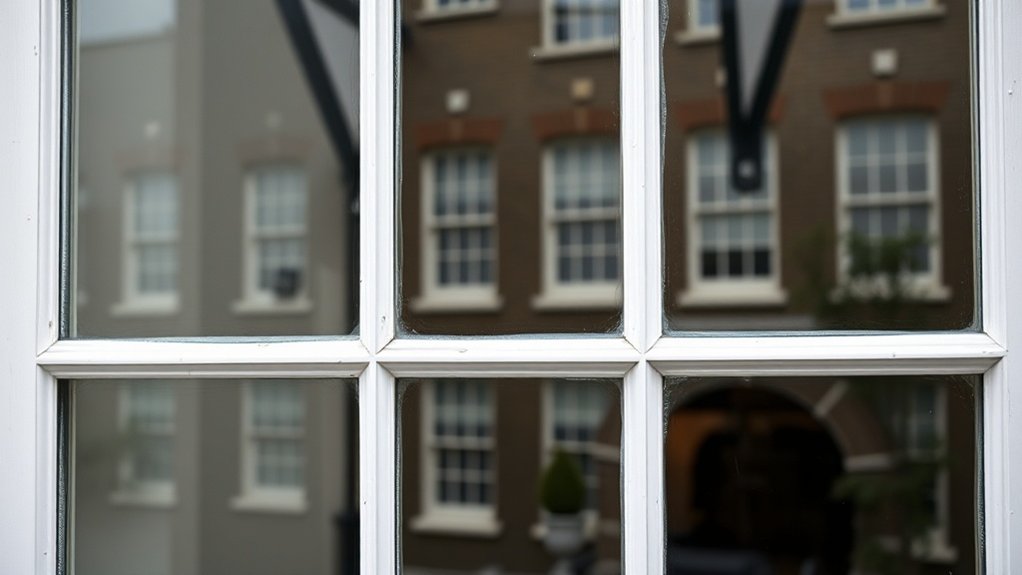
Yes, and it is one of the most popular jobs we do on period houses. The original timber frames stay and the glass is replaced with slimline double glazing or vacuum glazing, typically 10 to 14 mm thick, sized to the existing rebates and fitted with low-E coatings and warm-edge spacers. The extra weight means the sash weights, cords and pulleys have to be rebalanced, and safety glass is needed at low level. In conservation areas we check the specification with the planning officer first.
What Warranties and Aftercare Should I Expect From a Bickley Specialist Glass Installer?
Expect a written guarantee on sealed units, typically five to ten years against seal failure and misting, and on hardware, alongside a workmanship guarantee of at least a year or two. Ask for the U-value and other performance figures in writing, with a clear remedy if the installed glass does not meet them. Aftercare should include cleaning guidance, recommended inspection intervals, a route for emergency boarding and replacement after breakage, and a simple way to report a defect with photographs and a promised response time.
Summary
Choosing specialist glass in Bickley is a decision about performance, safety and how the building will behave for decades, not just a choice of material. From toughened and laminated safety glass to balustrades and solar-control units, the details matter: thickness, fixing method, edge finish and the right British Standard behind each one. Specified correctly, the glass protects people, saves energy and copes with real Bickley conditions. Call us for a free consultation and quotation on your next project. Not sure which service you need? Our glaziers in Bickley will talk it through on the phone and quote for free.