Georgian bars and leaded glass are the two period glazing details we are asked about most often in Bickley. Georgian bars divide a sash into a neat grid and belong on the front of Georgian and early Victorian houses. Leaded glass joins small panes with strips of lead called cames, which is why it turns up in Edwardian porches, 1930s bay tops and side lights. Both can now be combined with slimline double glazing, so you can keep the look of your street while cutting draughts and heating bills.
Key insights
- Georgian bars suit the gridded sashes on the main elevation of Georgian and early Victorian houses in Bickley; leaded glass is better for porches, bay tops, gables and decorative side panels.
- Bar width, pane proportion and sightline matter most; a bar that is 3 mm too fat spoils the whole window.
- In a conservation area or listed building you will usually need consent before changing glazing pattern, frame material or profile.
- Slim or vacuum double glazing, warm-edge spacers and secondary glazing bring a period window close to modern performance without changing its street appearance.
How Georgian Bars and Leaded Glass Shaped Bickley, BR1 Homes
Glazing bars were never just ornament. In the eighteenth century, crown glass could only be cut into small sheets, so a sash had to be divided into six, eight or twelve panes. The timber bars holding those panes set the proportions of every window in a Bickley terrace, and the windows set the rhythm of the street. The result was a practical answer to a glass supply problem that happened to be beautiful.
Leaded glass followed a different route. Lead cames let a glazier assemble diamonds, quarries and curved pieces into one panel, so it appears on churches first and then on Victorian and Edwardian houses wanting a picturesque touch. By the 1930s, builders in Bickley used leaded top lights in bays and front doors as standard.
Georgian Bars vs Leaded Glass: Key Differences
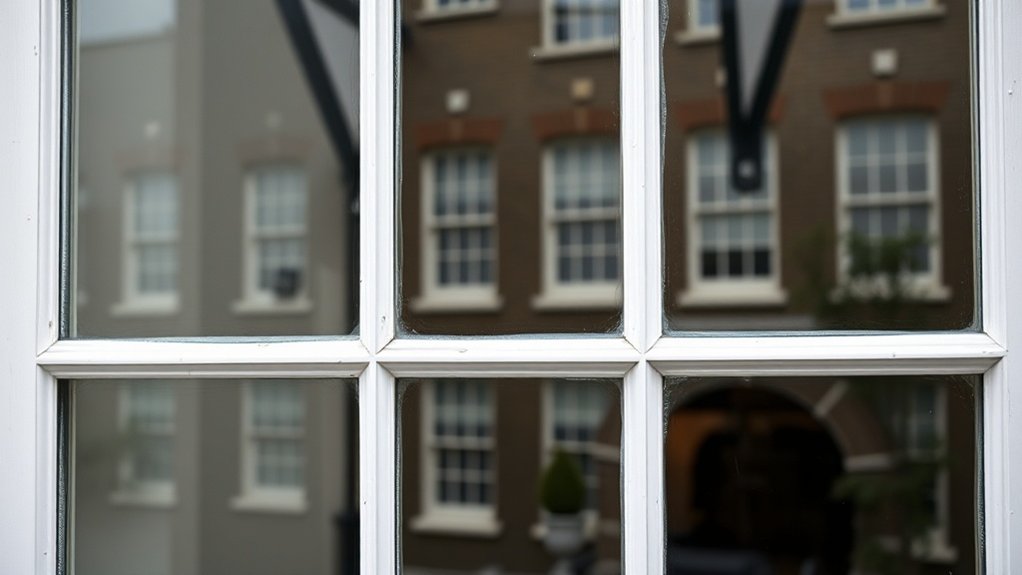
The simplest test is to ask what holds the glass. A Georgian bar is a moulded strip of timber (occasionally steel) with a putty rebate on the outside, and each pane sits in its own rebate. The pattern is almost always a rectangular grid, the bars are narrow, typically 16 to 22 mm, and the effect depends on equal panes that match the neighbours on either side.
With leaded glass, H-section lead cames soldered at every junction hold the pieces, and the finished panel is then fitted into a timber or metal frame. That construction allows diamonds, coloured borders, flowing Art Nouveau shapes or painted inserts. Lead is soft and the panel flexes, so leaded lights need cementing and periodic re-leading in a way a Georgian sash never does.
Choosing Georgian Bars or Leaded Glass for Your Bickley Home
Start with the date of the house and what survives. If you own a Georgian or early Victorian terrace in Bickley with box sashes on the front, Georgian bars are almost always right, and the aim is to copy the surviving pane count and bar width exactly. A later Victorian house with two-over-two sashes may never have had bars, and adding them creates a false history that planners dislike.
Next, think about the elevation. Front windows carry the most weight with conservation officers and future buyers, so copy what was there. Rear extensions and loft windows give more freedom. Leaded glass comes into its own in porches, over front doors, in bay top lights and landing windows, where a decorative panel adds character without pretending to be part of the main composition.
Balancing Period Charm and Modern Comfort in Your Windows
A period window does not have to be a cold one. Treat the frame, the pane layout and the original hardware as fixed, then improve everything you cannot see. Slim sealed units of 12 to 16 mm, warm-edge spacers, brush-pile draught seals and well-fitted secondary glazing can take a leaky single-glazed sash from a U-value of around 5 W/m²K to something near 2, with no change to how it looks from the pavement.
Preserving Historic Window Character
Before work begins, we record what is original: bar profile, the ripple of old cylinder or crown glass, putty lines, horns, parting beads and any cames still holding their original cement. Many Bickley sashes have had a pane or two replaced with flat float glass over the years, and spotting these early tells you what can be reused.
Repair comes before replacement wherever the timber is sound. Rotten bottom rails can be spliced, loose joints re-wedged, and a bowed leaded panel flattened and re-leaded while keeping most of its glass. When a part really has failed, the new one should match the old in section and sightline, not just rough appearance.
Enhancing Comfort And Efficiency
Comfort upgrades are easier than most owners expect, provided they are planned around the existing rebates. On a sash with Georgian bars, we check whether the rebate can take a slim double-glazed unit; if so, each pane becomes a small sealed unit and the bars stay put. Where rebates are too shallow, secondary glazing inside the reveal gives a bigger thermal and acoustic gain than any unit change and leaves the original glass untouched.
Spacers should be warm-edge in a dark colour so they vanish behind the putty line. Low-iron outer glass keeps the view neutral, and a soft-coat low-e layer on the inner pane handles heat loss. For leaded lights, the restored panel is usually encapsulated inside a sealed unit, so the lead sits in the cavity, protected from weather and visible from both sides.
Once a draughty window is sealed, a trickle vent routed through the head stops condensation on cold mornings.
Materials and Glazing Options for Energy‑Efficient Period Windows
Glass choice decides both how the window performs and how it reads from outside. Old crown and cylinder glass has a gentle waviness that flat float lacks.
Authentic Glass Types Compared
Original single glazing is the most authentic choice and the one a conservation officer will often prefer on a listed building. It is thin and slightly rippled, performs poorly on heat loss, and pairs well with secondary glazing. Restoration glass, drawn or mouth-blown to mimic the old distortions, gives the same look in larger, more consistent sheets and is the usual choice when panes have been lost.
Slim double-glazed units, often 4-4-4 or 4-6-4 with krypton or argon, are the practical middle ground: they sit in a deepened rebate behind existing bars and bring the U-value to around 1.9 to 2.1 W/m²K. Vacuum glazing is thinner still, roughly 6 to 8 mm, with a centre-pane value near 1.0, though it costs more and shows tiny pillar dots up close. Laminated glass adds security and suits ground-floor windows on busy Bickley roads.
Balancing Efficiency And Heritage
The goal is a window that performs like a modern one while keeping bars and cames as thin as the originals. Slim and vacuum units make that possible because they do not need the 24 to 28 mm rebates of standard double glazing, so a 20 mm bar stays a 20 mm bar. Use durable timber such as Accoya, or thermally broken steel where a fine metal arris matters.
Keep the low-e coating on the inner pane, where it does not tint the outside face or throw reflections onto neighbouring brickwork. Where even slim units are refused, well-templated secondary glazing with its own perimeter seals delivers excellent airtightness, often a better noise result, and is entirely reversible, which is the word planners most like to hear.
Planning Rules and Conservation Areas for Bickley Windows
Many streets where Georgian bars and leaded glass survive in Bickley sit inside a conservation area, and some houses are listed. Listed building consent is needed for almost any change to a listed window, including swapping the glass. In a conservation area, an Article 4 direction may remove permitted development rights for front windows, so even a like-for-like replacement can need an application.
Proposals that keep the original frame, add slim units or secondary glazing and record what was done usually succeed. Swapping timber for uPVC on a street elevation, turning a six-over-six sash into a single pane, or sticking flat bars on the outside of a sealed unit tends to be refused. Read the Conservation Area Appraisal for your street first, because it often says exactly what the council wants to protect.
Costs, Installation and Choosing the Right Specialist
Period glazing costs more than ordinary replacement windows, and in Bickley, BR1 the gap is driven by labour rather than materials. Hand-cut panes, individual putty beds, soldered cames and on-site templating all take time.
Ask for quotes that break out survey, making, fitting and any repair to surrounding joinery, so you can compare like with like. Check whether the price covers true divided bars with a separate unit in each pane or one unit with applied bars, since the two look and cost very differently.
Choose a glazier who is FENSA registered for replacement work and can show finished jobs in local conservation areas. Membership of a heritage body such as SPAB or the Glass and Glazing Federation is a good sign. Insist on a drawn section through the proposed bar and a corner sample before anything is manufactured.
See our main specialist glass page for the full range of options in Bickley. Related work we take on includes frosted obscure glass.
Frequently Asked Questions
Can Georgian Bars or Leaded Glass Improve My Property’s Resale Value in Bickley?
In most cases, yes. Buyers viewing period houses in Bickley notice windows first, and correctly proportioned Georgian bars or original leaded lights signal a house that has been cared for. The gain is strongest when the windows also work well, with slim double glazing and no draughts. Poor replacements, or uPVC on a listed façade, can raise a conservation compliance question during conveyancing.
Are There Security Advantages to Installing Leaded Glass or Georgian Bar Windows?
Only small ones, and you should not rely on them. A leaded panel absorbs a knock better than a single large pane because the cames hold broken pieces together, but a determined intruder will push straight through. Decorative bars add almost nothing; bars within a sealed unit stiffen the glass slightly. Real security comes from laminated glass on the inner pane, sound frames, key-locking fasteners and, for ground-floor windows, a unit tested to PAS 24.
How Do Georgian Bars and Leaded Glass Affect Indoor Noise Reduction in Busy Bickley Streets?
Bars and cames themselves make little difference to noise. What counts is glass thickness, the gap between panes and how well the frame seals. On a main road in Bickley, the biggest single improvement is usually secondary glazing with a 100 mm or larger air gap, which cuts traffic noise noticeably while leaving the leaded or barred outer window untouched. If you are replacing panes, specify an acoustic laminated inner leaf of 6.4 mm or more.
Can I Integrate Decorative Stained Glass Designs With Traditional Leaded Windows?
Yes, and it is a common request for front doors, porches and landing windows. A new stained panel is built the same way as a plain leaded light, so coloured, textured or painted pieces can be worked into a traditional came layout without structural change. For insulation and protection, the finished panel can be encapsulated in a sealed unit with a UV-filtering laminate on the inner face, so the artwork is sheltered while the outside still reads as a conventional leaded window.
Summary
Georgian bars and leaded glass give Bickley houses much of their character, and with slim double glazing, careful repair and the right consents you can keep that character while enjoying a warmer, quieter home. The key is matching original proportions, repairing before replacing, and choosing a glazier who understands conservation areas. Call us for a free survey and quote, and we will tell you what your windows need and what the planners are likely to accept.